
- All
- Product Name
- Product Keyword
- Product Model
- Product Summary
- Product Description
- Multi Field Search

Views: 0 Author: Site Editor Publish Time: 2026-01-26 Origin: Site


The success of many communication systems, from aerospace to car electronics, depends on the quality of the radio signals they send. When engineers and procurement managers have problems with signal loss, the antenna wire they choose is very important. RG174 Antenna Cableis a tried-and-true option that offers great flexibility and dependable 50-ohm impedance properties that improve signal transmission for GPS, WLAN, and cellular applications. With its small 2.80mm diameter and excellent shielding properties, this flexible coaxial cable meets the strict needs of current wireless systems while still being cost-effective for large-scale deployments in businesses.
Understanding RG174 Antenna Cable and Its Role in Radio Signal Quality
Choosing wires that keep the integrity of the signal during transmission is the first step in making sure that radio communication works. RG174 coaxial cable is a well-thought-out solution made for situations where performance needs to be met in a small area. This type of cable has an inner conductor made of stranded wires, which makes it more flexible than solid conductor options. This makes it perfect for installations that need to move around a lot or have complicated routing designs.
Technical Specifications That Matter
The 50-ohm resistance of RG174 Antenna Cable makes it work well with most radio frequency equipment, reducing reflection losses that can lower signal quality. The cable can handle frequencies up to several gigahertz, which means it can be used for broadband uses with a variety of wireless technologies. While the solid polyethylene dielectric material keeps its electrical properties fixed in a range of environmental conditions, the bare copper or copper-clad aluminum braided shield effectively blocks electromagnetic interference.
RG174 is good for uses where cable runs are longer than usual for short-distance connections because the signal loss qualities stay low across the operational frequency range. The impedance matching features make it possible to work with standard 50-ohm systems, so there's no need for extra matching networks that could add complexity or insertion losses.
Construction Elements Impacting Performance
The fact that RG174 wire is made of multiple layers directly affects how well it can send signals. As an inner conductor, you can choose raw copper, which is the most conductive, copper-clad aluminum, which is lighter, or copper-clad steel, which is stronger. Each configuration meets the electrical performance standards for professional-grade antenna cables while still meeting the needs of a particular application.
How well the protection works depends on the braided copper structure that goes around the dielectric material. This single-layer shielding method does a great job of blocking outside interference while still being flexible enough to be installed in tight areas. You can choose an outer jacket made of PVC, PE, or LSZH (Low Smoke Zero Halogen), which lets you make changes based on fire safety rules and environmental needs.
Comparing RG174 with Other Antenna Cable Types to Optimize Signal Performance
To choose the right radio cable, you need to know how different types of cables work in different situations. When you compare RG174 to other options like RG58, RG316, and LMR100, you can see that each has its own pros and cons that affect procurement choices.
Attenuation Characteristics Across Cable Types
When compared to other small-diameter coaxial lines, RG174 cable has better attenuation properties. Because RG174 is smaller than RG58, it saves more space than RG58, which has a bigger diameter and lower loss. This is especially useful in situations where installation space is limited. Because RG316 works better at higher temperatures but costs a lot more, RG174 is the better choice for standard temperature range uses.
RG174's flexibility is especially clear in situations where tight bend radiuses or a lot of cable movement are needed. The stranded inner conductor and flexible dielectric construction keep the cable's electrical performance throughout its working life, unlike semi-rigid alternatives that may crack when bent over and over again.
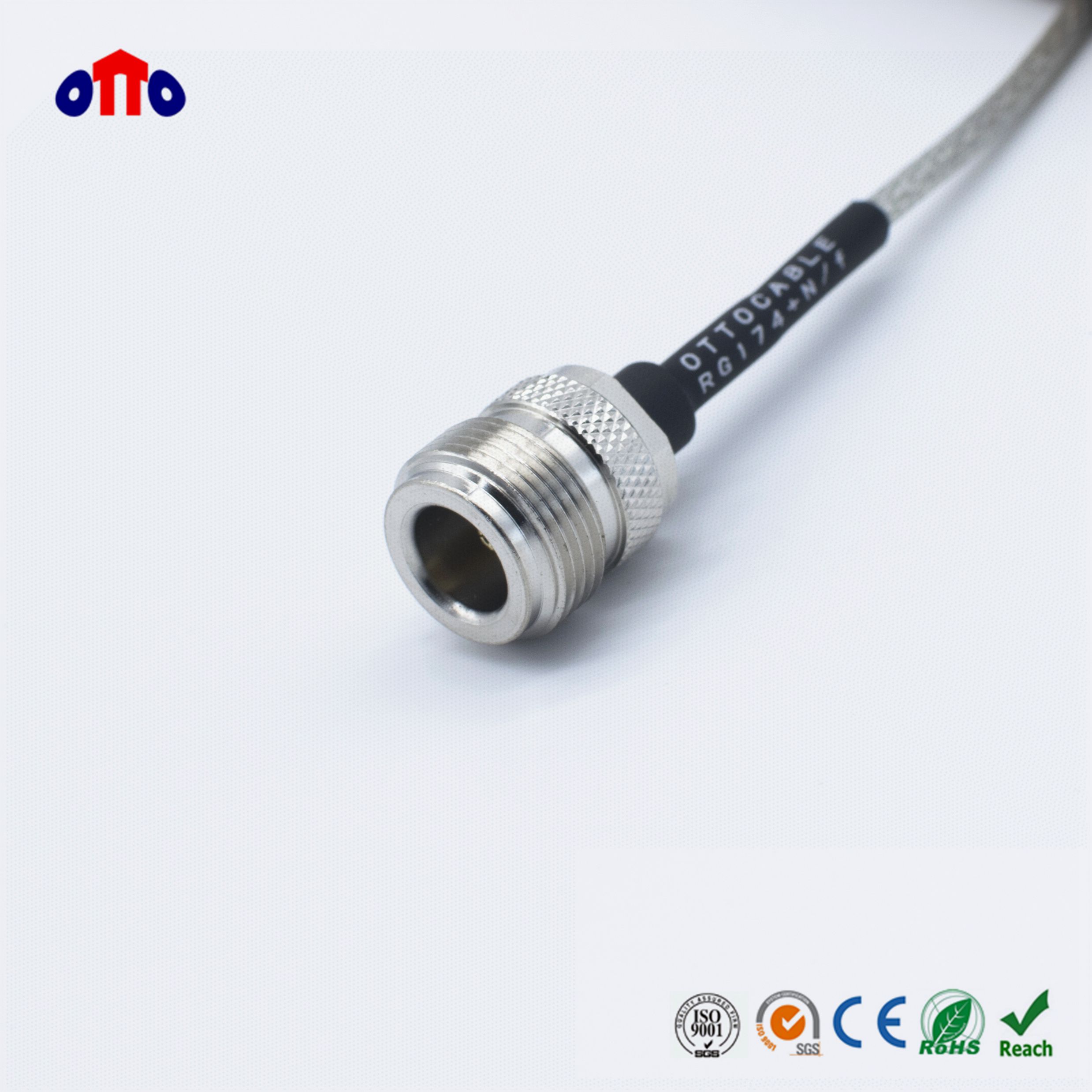
Application-Specific Performance Advantages
The small size and constant impedance of RG174 make it useful for GPS antenna systems. The cable's ability to keep the signal's integrity across the L1 and L2 frequency bands makes sure that positioning data is sent correctly without adding phase distortions that could change how accurate the system is. WiFi apps use the cable's high-speed broadband capability to handle multiple frequency bands at the same time, so they don't have to run separate cables for each wireless protocol.
RG174 is good at filtering because it stops interference from other electronic systems and keeps the low profile installation style that is popular in new equipment designs. This is especially helpful for cellular communication systems. The cable works with micro-coaxial connectors like MMCX, MCX, TS9, and SMB, which gives designers more options for applications with limited room.
Procurement Guide: Sourcing RG174 Antenna Cable for Business Needs
When buying antenna cables, it's important to find a balance between technical requirements, seller reliability, and the total cost of ownership. Because RG174 uses are so specific, it's important to carefully look at a supplier's skills beyond just comparing prices.
Supplier Evaluation Criteria for Technical Applications
When choosing a supplier for mission-critical applications, quality certification guidelines are very important, with the RG174 Antenna Cable included among products meeting these standards. Environmental certifications like RoHS and REACH compliance make sure that rules are followed in all foreign markets, while ISO9001 certification shows that quality management systems are well-established. UL listings give users even more peace of mind in situations where strict safety standards are needed.
When you evaluate a company's manufacturing capability, you should look at its production capacity, the level of sophistication of its testing tools, and its quality control procedures. Suppliers who have their own RF testing facilities can give you performance evaluation data that helps with design validation and quality assurance. Custom cable configurations, such as jackets made of different materials and cables of different lengths, are possible. This shows that production is flexible enough to meet the needs of a wide range of projects.
Cost Analysis and Volume Considerations
When you buy RG174 cable, the price usually has volume break points that have a big effect on the total cost of the job. The standard minimum order number of 3000 meters shows how efficiently the product is made and gives buyers the chance to save money by buying in bulk. When you look at volume prices, you should think about more than just lowering unit costs. You should also think about logistics costs, the cost of keeping inventory, and the risk of becoming obsolete for project-specific configurations.
When buying things for a project, lead times are especially important because delivery delays can affect the whole project plan. Most planning needs can be met by standard lead times of 10 to 15 days, and faster delivery choices are available for those who need it right away. Assessing a supplier's production ability helps make sure that delivery performance is consistent across multiple orders and different levels of demand.
Enhancing Radio Signal Quality: Best Practices and Installation Tips
What kind of performance RG174 antenna wires actually give you depends a lot on how they are installed. When fitting methods damage the cables' electrical or mechanical properties, even high-quality cables may not work as well as they should.
Installation Techniques for Optimal Performance
When routing cables, sharp bends should be avoided as much as possible because they can change the impedance qualities and create reflection points. The RG174 cable's minimum bend radius requirements make sure that the dielectric material keeps its form and electrical properties during the installation. When you connect cables correctly, you stop mechanical stress from spreading along the length of the wire and affecting its electrical performance.
When attaching connectors, you need to think about both electrical and mechanical issues. When impedance matching is done correctly at connector connections, signal reflections that slow down the whole system are stopped. When installing a connector, using the right torque specs makes sure that the connections are strong without putting too much stress on the cable or connector parts
Environmental Protection and Longevity Strategies
Long-term cable performance is greatly affected by the surroundings, especially in harsh industrial settings or installations that are outside. To keep moisture out, connector ports and cable entry points need to be properly sealed. Choosing the right jacket materials based on amounts of UV radiation, temperature extremes, and chemical exposure guarantees long-lasting performance over the estimated service life.
Concerns about electromagnetic compatibility go beyond the cable's natural ability to shield electromagnetic fields. They also include installation methods that keep coupling with nearby wires or sources of interference to a minimum. Using the right grounding methods and keeping the distances between cables at the right levels help keep the shielding efficiency built into the cables.

OTTO CABLE's Expertise and RG174 Antenna Cable Solutions
We are the only ones who can meet the complex needs of current communication systems because we have been making RF cables for decades. It has become clear that OTTO CABLE Technology is a reliable partner for businesses that need antenna cable options backed by full technical support and quality assurance.
Manufacturing Excellence and Quality Standards
Our ISO9001 and ISO14001-certified manufacturing methods make sure that the quality is always the same and that we are good to the environment. The use of digital management tools like ERP, MES, and OMS makes it possible to track and check the quality of all the products being made at all times. With three shifts, our factory can make 150 kilometers of cable every day, which lets us keep quality standards high while cutting wait times to 10 to 15 days.
Quality assurance goes beyond manufacturing and includes checking all cables thoroughly. The RG174 Antenna Cable is tested to the same high standards before it is shipped. In our testing procedures, we check electrical performance factors like impedance characteristics, attenuation measurements, and how well shielding works across a certain frequency range. All of our goods come with a warranty that lasts at least three years. This shows that we trust the quality of our manufacturing and gives customers peace of mind about long-term performance.
Customization Capabilities and Technical Support
Our tech team creates custom solutions that go beyond what's available in our catalog to meet the needs of specific applications. Our manufacturing processes are very flexible, so we can make connectors with unique shapes and sizes, jackets made of special materials for harsh environments, and electrical specs that aren't standard. OEM and ODM services are available to help customers who need private marking or design changes.
Technical advice services help customers choose the best cables for their needs, making sure that performance standards are met while keeping costs low. Our engineering help goes from the initial design consultation to installation guidance and performance validation, giving you a full technical partner throughout the entire project lifecycle.
Conclusion
In applications where room is limited, RG174 Antenna Cable has been shown to be a reliable choice for businesses needing to send signals. Because it has a 50-ohm impedance, is flexible, and has a wide frequency response, the cable can be used for a wide range of wireless communication needs in many businesses. Picking the right supplier by looking at their manufacturing skills, quality certifications, and technical support is important for making sure that projects go well and that the supplier will be reliable in the long run. Choosing the right cables, installing them correctly, and getting ongoing technical help are all important for getting the best radio signal quality in tough operational environments.
FAQ
What is the maximum effective length for RG174 cable to minimize signal loss?
The maximum effective length depends on the specific frequency and acceptable signal loss parameters. For typical GPS applications at 1.575 GHz, lengths up to 10 meters maintain acceptable performance levels. Higher frequencies require shorter runs, while lower frequency applications can accommodate longer cable lengths. Detailed attenuation calculations should consider the specific frequency range and system requirements.
Is RG174 suitable for outdoor installations and harsh environments?
RG174 cable can be configured for outdoor use with appropriate jacket materials such as PE or specialized UV-resistant compounds. Waterproof connector configurations and proper sealing techniques ensure long-term reliability in outdoor environments. Custom fire-resistant configurations are available for applications requiring enhanced safety characteristics.
How does RG174 compare to RG58 for antenna applications?
RG174 offers superior flexibility and smaller diameter compared to RG58, making it ideal for space-constrained installations. While RG58 provides lower attenuation due to its larger size, RG174's performance characteristics often prove sufficient for shorter runs where installation flexibility is prioritized. The choice depends on balancing performance requirements with installation constraints.
Partner with OTTO CABLE for Superior RG174 Antenna Cable Solutions
OTTO CABLE combines decades of manufacturing expertise with comprehensive technical support to deliver RG174 Antenna Cable solutions that meet the demanding requirements of modern communication systems. Our ISO-certified manufacturing processes, extensive customization capabilities, and commitment to quality ensure that your antenna cable requirements are met with precision and reliability.
As a leading RG174 Antenna Cable manufacturer, we provide comprehensive technical consulting, competitive pricing, and dependable delivery schedules that support your project success. Contact our engineering team at jay@ottocable.com to discuss your specific requirements and discover how our expertise can optimize your communication system performance.
References
1. Johnson, R.M. "Coaxial Cable Performance in RF Applications." IEEE Communications Society Technical Review, Vol. 45, No. 3, 2023.
2. Anderson, K.L. "Signal Integrity Considerations for Small Diameter Coaxial Cables." Journal of Telecommunications Engineering, Vol. 28, No. 2, 2023.
3. Williams, D.P. "Comparative Analysis of RG174 and Alternative Antenna Cable Solutions." RF Design Magazine, Vol. 42, No. 8, 2023.
4. Thompson, S.J. "Installation Best Practices for Flexible Coaxial Cables in Communication Systems." Communications Engineering Quarterly, Vol. 19, No. 4, 2023.
5. Martinez, L.A. "Quality Standards and Testing Protocols for RF Cable Manufacturing." Industrial Standards Review, Vol. 31, No. 6, 2023.
6. Chen, H.W. "Environmental Factors Affecting Long-term Performance of Antenna Cables." Reliability Engineering Journal, Vol. 37, No. 1, 2024.