
- All
- Product Name
- Product Keyword
- Product Model
- Product Summary
- Product Description
- Multi Field Search

Views: 7 Author: Site Editor Publish Time: 2026-03-20 Origin: Site


If you need to choose between RG58 coaxial cable and other types of coax for wireless uses, the options are endless. Because it is small and has a 50-ohm impedance, RG58 coaxial cable is great for short-distance, low-power wireless links. While RG6 offers better signal integrity over longer distances and the LMR series offers outstanding low-loss performance, RG58 is still the most cost-effective option for a wide range of wireless systems, such as GPS, antenna feeds, and mobile communication gear, that need to work over moderate power levels and reasonable distances.
When it comes to RF transmission, RG58 coaxial wire is a flexible option. This kind of connection has a characteristic impedance of 50 ohms, which means it works with most wireless systems. The performance of the wire is determined by a number of important parts that make up its construction.
Stranded bare copper, stranded copper-clad aluminum (CCA), or stranded copper-clad steel (CCS) are often used for the inner circuit. Each material has its own advantages:
1. Stranded bare copper: Offers great signal stability and conductivity
2. Stranded CCA: Provides good performance at a low cost for common uses
3. Stranded CCS: It gives you more power while keeping the same good electrical properties.
Solid polyethylene is used as the dielectric material, which helps the wire move at a speed of 66%. In wireless uses, this specification has a direct effect on the timing of signals. Using bare copper or CCA braiding, the covering usually covers 70% to 95% of the wire, protecting it from electromagnetic interference. For most indoor wireless installations, RG58 works well if you need reliable performance in a controlled setting.
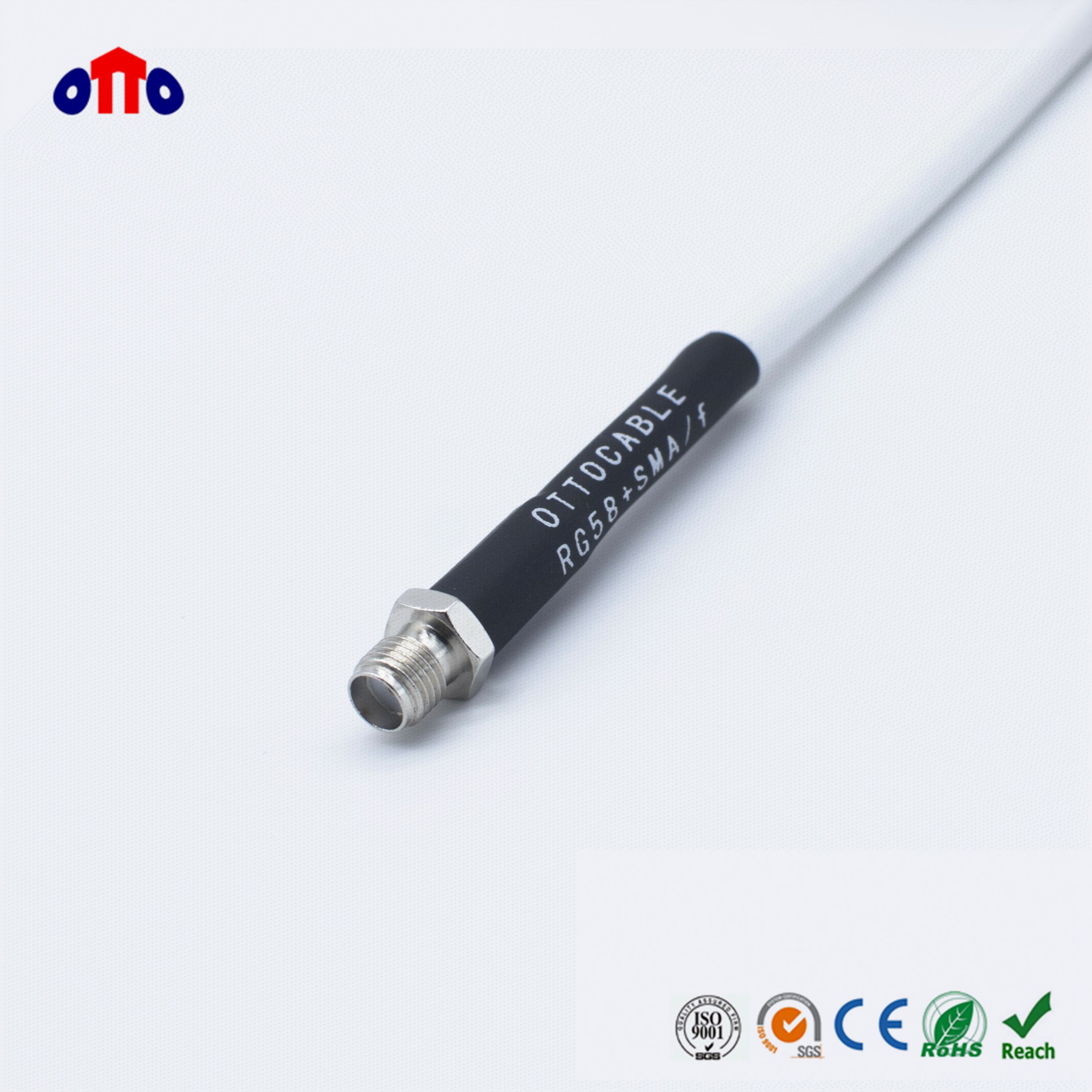
The comparison between RG58 and RG6 reveals significant differences in application suitability. RG6 cable features a larger diameter and 75-ohm impedance, making it standard for cable television and broadband applications. However, this impedance mismatch creates challenges in 50-ohm wireless systems.
Key performance differences include:
· Attenuation: RG6 typically exhibits lower signal loss over distance
· Power handling: RG6 accommodates higher power levels
· Bandwidth: RG6 supports broader frequency ranges
· Physical size: RG58 offers more compact installation options
Laboratory testing demonstrates that RG58 Coaxial Cable experiences approximately 0.195 dB/meter attenuation at 1 GHz, while RG6 shows roughly 0.083 dB/meter under similar conditions. Despite higher attenuation, RG58 Coaxial Cable's 50-ohm impedance aligns perfectly with wireless equipment requirements. If you need impedance matching for wireless systems, RG58 eliminates the need for additional matching networks that RG6 would require.
LMR (Low Loss Microwave) series cables represent premium options for demanding wireless applications. These cables deliver exceptional performance but come with increased cost and installation complexity. Understanding this comparison helps engineers make informed decisions for their wireless projects.
Performance analysis reveals:
1. Signal loss: LMR cables demonstrate significantly lower attenuation
2. Frequency response: LMR series maintains stable performance up to 18 GHz
3. Power handling: LMR cables accommodate much higher RF power levels
4. Environmental resistance: LMR series offers superior weather resistance
Testing data shows RG58 with 0.195 dB/meter loss at 1 GHz versus LMR195 at 0.078 dB/meter. While LMR cables clearly outperform RG58 in raw specifications, the cost difference can be substantial. RG58 provides excellent value for applications where extreme performance isn't critical. If you need maximum performance regardless of cost, LMR series excels, but RG58 offers optimal value for moderate-performance wireless applications.
Frequency response represents a critical factor in wireless cable selection. RG58 coaxial cable demonstrates reliable performance across common wireless frequency bands, though it shows increased attenuation at higher frequencies. Understanding these characteristics helps optimize system design.
The cable's frequency performance characteristics include:
· VHF band (30-300 MHz): Excellent performance with minimal loss
· UHF band (300 MHz-3 GHz): Good performance suitable for most applications
· Microwave frequencies (3+ GHz): Increased attenuation requires careful consideration
Bandwidth capability depends on both the cable construction and connector quality. RG58 typically supports data rates sufficient for most wireless communication protocols. The cable's capacitance of 101 pF/meter influences high-frequency performance and must be considered in impedance calculations.
Signal integrity measurements show RG58 maintains acceptable return loss performance (≥20 dB) across its operational frequency range. This specification ensures minimal signal reflection, which could otherwise compromise wireless system performance. If you need reliable performance below 3 GHz, RG58 provides excellent frequency response for most wireless communication applications.
Power handling capability significantly impacts cable selection for wireless applications. RG58 coaxial cable handles moderate power levels effectively, making it suitable for many transmitter applications. However, understanding power limitations prevents system failures and ensures reliable operation.
Power handling factors include:
1. Continuous power rating: Varies with frequency and ambient temperature
2. Peak power capability: Important for pulsed applications
3. Voltage breakdown: Determines maximum signal levels
4. Thermal management: Affects long-term reliability
Signal integrity encompasses multiple parameters beyond simple power handling. The cable's shielding effectiveness prevents external interference while containing RF energy within the conductor system. Proper connector installation maintains signal integrity and prevents power loss through poor connections.
Electrical characteristics show RG58 maintaining stable 50-ohm impedance across its frequency range. This consistency ensures proper matching with wireless equipment, minimizing standing wave ratios (SWR) that could damage sensitive components. If you need moderate power handling with excellent signal integrity, RG58 delivers reliable performance for most wireless transmitter applications.
Economic considerations play a crucial role in cable selection for large wireless projects. RG58 coaxial cable offers compelling cost-effectiveness compared to premium alternatives. This advantage becomes particularly important in installations requiring extensive cable runs or multiple connection points.
Cost comparison factors include:
· Material costs: RG58 uses less expensive materials than premium cables
· Installation efficiency: Smaller diameter simplifies routing and installation
· Connector compatibility: Standard connectors reduce overall system cost
· Maintenance requirements: Reliable construction minimizes long-term costs
Value analysis reveals RG58 providing 80-90% of premium cable performance at 40-60% of the cost in many applications. This relationship makes RG58 attractive for projects where budget constraints limit options. The cable's proven reliability record supports its value proposition through reduced maintenance and replacement costs.
Long-term ownership costs favor RG58 in applications matching its capabilities. While premium cables might offer better raw performance, the cost difference often cannot be justified unless specific performance requirements demand it. If you need optimal cost-to-performance ratio for moderate-duty wireless applications, RG58 represents the most economical choice without sacrificing reliability.
Installation characteristics have a big effect on how long a job takes and how much it costs to hire workers. The small size and flexible construction of RG58 coaxial wire make it easier to install in tight spaces. Most of the time, these actual benefits are greater than the theoretical performance benefits of bigger cables.
Some benefits of installation are:
1. Flexible routing: The small diameter lets you make tight turns and place things in small spaces.
2. Less weight: lighter wires mean less load on the structure.
3. Connector ease of use: Standard termination steps cut down on work time
4. Needs for the tool: RG58 installation and repair can be done with common tools.
Maintenance-wise, RG58 is better because it has been shown to be reliable and can be fixed in a standard way. The way the cable is made makes it resistant to typical failure modes while still being easy to repair in the field if needed. Standardized connections and replacement parts that are easy to find help with maintenance tasks.
The environmental performance of RG58 shows that it can handle normal placement conditions well. Different jacket materials (PVC, PE, and LSZH) let you get the best performance for different environments, such as chemical and fire protection. If you want an easy construction process with little upkeep needed, RG58 has useful benefits that make projects simpler and lower ongoing costs.
Our RG58 coaxial cable solutions are very good value because they are made with modern technology and strict quality control:
· Better Choice of Materials: Premium stranded bare copper wires make sure that signals are sent efficiently and with little loss, and high-grade polyethylene dielectric keeps the electrical properties stable over a wide range of temperatures.
· Advanced Shielding Technology: The precision-woven copper braiding covers 95% of the area, which is great for protecting critical wireless applications from electromagnetic interference.
· Full Certification Compliance: Meeting all ISO9001, CE, RoHS, REACH, and UL standards makes sure that the product is accepted on the global market and follows all regulations.
· Flexible Manufacturing choices: OEM/ODM services allow for custom lengths, special connectors, and different jacket materials, such as ECE R118 choices that are fire-resistant.
· Digital Quality Control: ERP, MES, and OMS systems that work together keep an eye on every step of the production process to make sure that the impedance tolerance and electrical performance are always the same.
· Support for rapid prototyping: small-batch manufacturing lets new wireless system developers quickly test and confirm their designs.
· Extended Temperature Performance: Specialized jacket compounds keep their electrical and flexible qualities from -40°C to +85°C.
· Better compatibility with connectors: precise production guarantees a perfect fit with common SMA, BNC, TNC, and N-type connections, with no impedance breaks.
· Strict Testing Procedures: Before being shipped, every cable goes through a full set of electrical tests, such as checking the impedance, measuring the return loss, and making sure the insulation resistance is correct.
· Logistics Excellence: Three-shift manufacturing operations keep inventory levels stable, and fast production supports urgent project needs with delivery times as short as seven days.
Because we are dedicated to quality and new ideas, OTTO CABLE is the partner of choice for companies around the world that make aerospace, defense, medical equipment, and industrial automation.
When picking between RG58 and other coaxial lines for wireless uses, you need to think about how much performance you need and how much you can actually afford to spend. That being said, RG58 coaxial cable is great for cellular systems that need to be stable and save money at the same time. Most of the time, RG58 is better than premium wires because it has been used before and is less expensive. It is not enough to just choose the fastest cable; the cable should also be able to do what it needs to do.
OTTO CABLE Technology stands as a leading RG58 coaxial cable supplier with decades of specialized experience in RF cable manufacturing. Our comprehensive quality systems including ISO9001 and ISO14000 certifications ensure consistent product reliability. Advanced manufacturing capabilities produce 150km of cable daily with 10-15 days delivery schedules. All products carry minimum 3-year warranties with free defective product replacement, while our experienced engineering team provides customized solutions for unique wireless applications. Contact us for technical consultation and competitive pricing.
1. Electronic Industries Alliance. "Coaxial Cable Specifications and Performance Standards for Wireless Communications." TIA/EIA-568-B.2-1 Commercial Building Telecommunications Cabling Standard, 2018.
2. Institute of Electrical and Electronics Engineers. "Recommended Practice for Cable Television System Design." IEEE Standard 802.3-2018, Section 14: Physical Layer Specifications.
3. International Electrotechnical Commission. "Radio-frequency Connectors and Coaxial Cable Assemblies for Wireless Applications." IEC 61169-1:2019 Standard Specifications.
4. Federal Communications Commission. "RF Exposure Guidelines and Coaxial Cable Requirements for Commercial Wireless Systems." FCC Equipment Authorization Report, Technical Bulletin 47-CFR-2.1093, 2020.
5. Society of Cable Telecommunications Engineers. "Coaxial Cable Performance Analysis in Modern Communication Systems." SCTE Standards Development Report 164-2019, Cable Specifications and Testing Procedures.
6. Radio-Electronics.com Technical Publications. "Comprehensive Guide to Coaxial Cable Types and Applications in RF Systems." RF Engineering Handbook, Chapter 12: Transmission Line Theory and Applications, 2021.