
- All
- Product Name
- Product Keyword
- Product Model
- Product Summary
- Product Description
- Multi Field Search

Views: 2 Author: Site Editor Publish Time: 2026-03-04 Origin: Site


When selecting the right cabling solution for outdoor antenna systems, the Outdoor OCT 400 Cable stands as a premium choice that delivers exceptional performance in challenging environments. This low-loss coaxial cable offers superior signal transmission capabilities while maintaining durability against harsh weather conditions, UV radiation, and temperature fluctuations. Designed specifically for wireless communications systems and antenna feeder applications, it serves as an ideal drop-in replacement for traditional RG8 and RG213 cables, providing enhanced reliability and cost-effectiveness for demanding outdoor installations across telecommunications, aerospace, and industrial automation sectors.
The OCT 400 coaxial cable is a major breakthrough in the technology of outdoor antenna cabling. It was designed with standards that are identical to those of the well-known LMR-400 standard. Having an impedance of 50 ohms over its entire length, this cable is suitable for use with a broad variety of antenna layouts and wireless communication systems since it is designed to withstand outside. A clever multi-layer structure is included on the cable, which guarantees the highest pos
sible level of signal integrity even under the most difficult environmental circumstances.
There are a number of essential components that are included into the manufacture of this outdoor antenna cable, which contribute to the remarkable performance qualities that it has. Copper-clad aluminum is used for the inner conductor, which offers superior conductivity while preserving cost-effectiveness and reducing weight in comparison to alternatives made of solid copper. Because of this design decision, it is possible to transmit signals effectively across long distances without sacrificing the quality of the performance.
The dielectric layer is made up of foam polyethylene (PE), which is able to drastically cut down on signal loss and keep its electrical characteristics steady throughout a wide range of temperatures. With its contribution to the cable's remarkable 84% velocity of propagation, this foam PE dielectric helps to ensure that signals are sent quickly and with a low amount of delay. When it comes to high-frequency applications, the cable's capacitance value of 78.4 pF/m is an additional factor that contributes to its capacity to preserve signal integrity.
When it comes to the design of the OCT 400 for use in outdoor settings, the dual-shielding system is one of the most important components. While the main shielding layer is made up of aluminum foil, which offers full protection against electromagnetic interference (EMI), the secondary shielding layer is made up of tin copper braid, which offers extra protection and enhances the endurance of the shielding layer. This dual-shielding strategy provides improved signal protection in comparison to alternatives that just use a single shield, such as typical RG8 cables.
It is possible to choose among PVC, PE, and LSZH (Low Smoke Zero Halogen) materials for the outer jacket. Each of these materials offers a unique set of advantages that are suitable for a particular installation scenario. While keeping their flexibility to facilitate quicker installation techniques, these jacket materials provide substantial protection against ultraviolet radiation, moisture infiltration, and mechanical damage. Both the voltage withstand rating of 2500 Volts DC and the jacket spark resistance of 8000 Volts RMS are indications that the cable is capable of functioning in a secure manner in high-voltage situations.
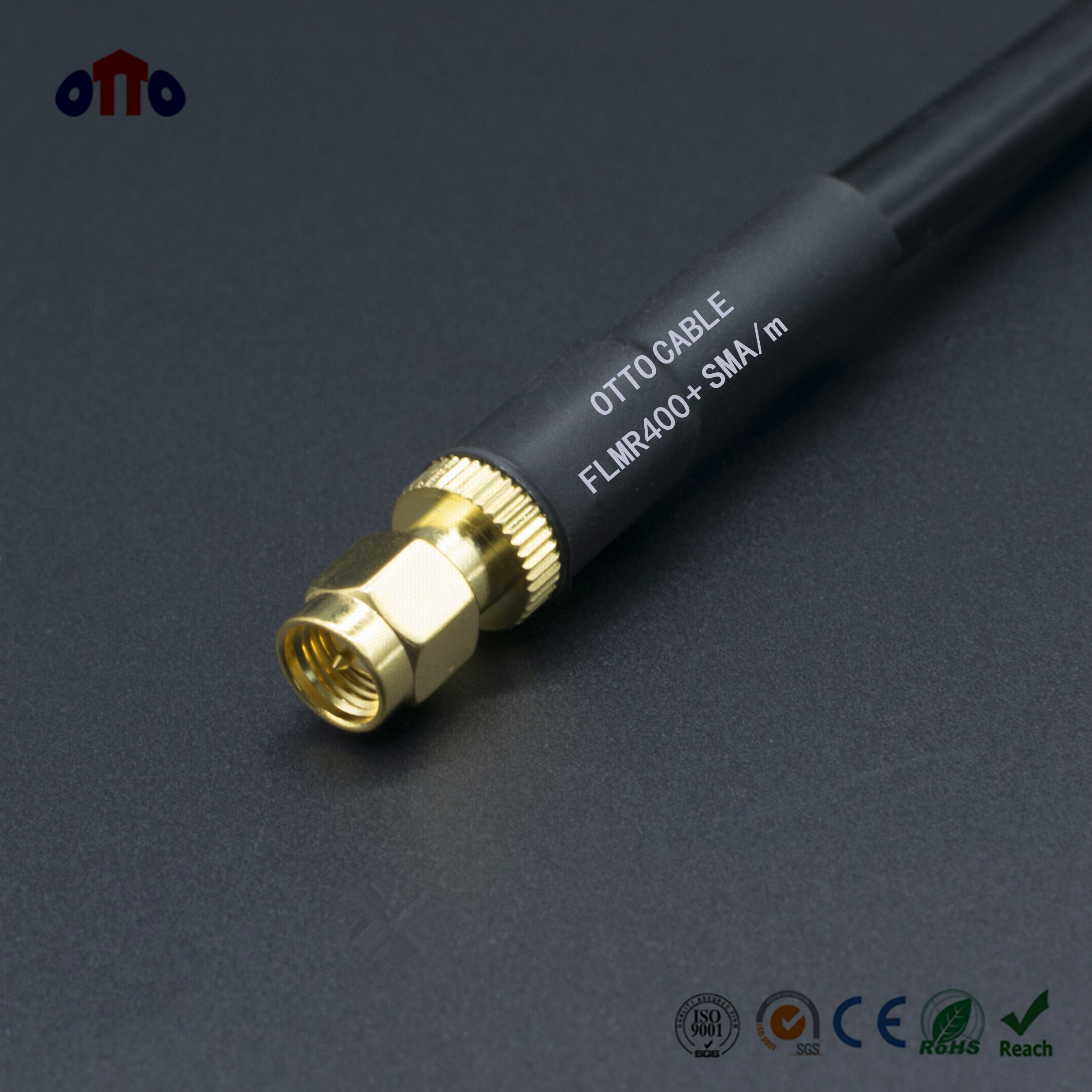
The market for outdoor antenna cables requires solutions that are able to resist years of exposure to extreme climatic conditions while yet maintaining constant performance despite the hard circumstances. The Outdoor OCT 400 Cable is designed to solve these difficulties by providing a complete set of durability characteristics and performance advantages. These benefits immediately translate into lower costs for system maintenance and increased system dependability.
The most significant benefit of this outdoor coaxial cable is that it has incredibly low signal loss characteristics. In terms of attenuation performance, it is superior to both RG8 and RG213 alternatives. Because of this decreased signal loss, the efficiency of the system has increased, transmission lengths have been increased, and the overall performance of the network has been improved. A return loss standard of at least 20 decibels guarantees that there will be little signal reflection, which is essential for ensuring that the antenna system continues to function ideally.
Listed below are the primary performance advantages that set this cable apart from others when used in outdoor applications:
• Enhanced Signal Integrity: The advanced foam PE dielectric and dual-shielding design maintain consistent impedance characteristics across the entire cable length, ensuring reliable signal transmission even in challenging RF environments.
• Extended Distance Capability: Lower attenuation rates enable longer cable runs without requiring signal amplification, reducing system complexity and installation costs while improving overall reliability.
• Temperature Stability: The carefully selected materials maintain their electrical properties across wide temperature ranges, ensuring consistent performance from extreme cold to high heat conditions.
• Moisture Resistance: Advanced jacket materials and construction techniques prevent water ingress, which is critical for maintaining signal quality and preventing corrosion in outdoor installations.
The procurement managers and engineers who are responsible for choosing cables for mission-critical outdoor antenna systems confront a number of common issues, and these performance improvements directly address those concerns. The increased dependability decreases the frequency with which replacements are required and minimizes the amount of time that the system is down, which ultimately results in considerable cost savings during the cable's lifespan of operation.
One of the distinguishing characteristics of high-quality outdoor antenna cabling is its resistance to damaging environmental conditions. The OCT 400 cable has a number of different protective elements that have been particularly intended to resist the risks that are associated with outdoor installation conditions. Compounds that are resistant to ultraviolet light keep the jacket from deteriorating as a result of extended exposure to the sun, and the sturdy construction protects it from damage caused by wind, ice, and temperature fluctuations.
In addition to providing basic protection against the elements, the cable's mechanical endurance also includes resistance against rat damage, which is a major problem in outdoor installations. Animal interference is discouraged by the durability of the outer jacket and the interior structure, which also maintains flexibility for installation around obstacles and via conduits. The use of routine inspection processes may further prolong the life of cables by detecting possible problems before they have an effect on the functioning of the system.
The ability to make educated decisions for outdoor antenna applications is made possible by having a thorough understanding of the performance variations between the different cable alternatives. Providing performance qualities that span the gap between conventional RG-type cables and premium low-loss alternatives while preserving cost-effectiveness for large-scale deployments, the Outdoor OCT 400 Cable has a unique position in the market. It is able to do this because it offers exceptional performance features.
The interaction between OCT 400, RG8, and RG213 cables exposes significant differences that have an effect on both the technical performance and the financial concerns involved. Over the course of many decades, RG8 and RG213 cables have been used as industry standards. However, the OCT 400 cable offers a significant advancement in cable technology that tackles a number of restrictions that are associated with other solutions.
When compared to OCT 400 cables, RG8 cables often have greater attenuation rates. This is especially true at higher frequencies, which is where current wireless systems operate. Due to the increased signal loss, the feasible transmission distance must be limited or the frequency of amplification must be raised, which may result in an increase in the overall complexity of the system. Because of its enhanced loss characteristics, the OCT 400 makes it possible to build simpler systems with fewer active components, which in turn improves the system's overall dependability.
There are several similarities between RG213 cables and OCT 400 cables, notably with regard to impedance and basic construction principles. On the other hand, the OCT 400's outstanding performance in outdoor situations is a result of its use of cutting-edge dielectric materials and carefully tuned shielding design. As a consequence of the foam PE dielectric's superior electrical qualities in comparison to the solid PE dielectric that is commonly found in RG213 cables, the cable's high-frequency performance is enhanced and the loss is reduced.
When it comes to long-term dependability and performance, the contrast between cable applications that are used inside and those that are used outside becomes quite important. In spite of the fact that they may be more affordable than outdoor cables, indoor cables are not ideal for antenna applications since they do not have the environmental protection elements that are necessary for outside installations. By extending the service life of the cable and reducing the amount of maintenance that is required, outdoor-rated cables such as the OCT 400 justify the extra investment that is required. These cables include jackets that are resistant to ultraviolet light, moisture, and temperature.
The use of indoor wires is just not capable of adequately addressing the specific issues that are presented by outside situations. Temperature cycling, exposure to moisture, and ultraviolet light all contribute to the rapid deterioration of indoor cables, which ultimately results in a decline in performance and an early failure. The specific construction of the OCT 400 tackles these issues from the very beginning of the design process, so assuring that it will continue to operate consistently during its entire operating lifespan.
Attaining the highest possible level of performance from any outside antenna cable system is contingent upon the implementation of appropriate installation techniques. In spite of the fact that the design of the OCT 400 cable makes installation simple, it is essential to pay attention to certain elements in order to guarantee its long-term dependability and efficient operation. When technical teams have a solid understanding of these installation principles, they are better equipped to prevent frequent errors that might threaten the functioning of the system.
Before beginning the process of cable installation, it is necessary to do a thorough site inspection and prepare the processes. In order to achieve optimum system performance, the installation environment has a direct influence on the choices regarding cable routing, the support needs, and the protective measures that are required. Before commencing installation work, it is necessary to do an assessment of a number of factors, including the existing infrastructure, the levels of environmental exposure, and the possible interference sources.
During the design process for cable routing, it is important to reduce the cable's exposure to mechanical stress while avoiding severe bends that might potentially cause damage to the cable or deteriorate its electrical qualities. Because of its flexibility, the Outdoor OCT 400 Cable can accommodate respectable bending radii; nevertheless, surpassing the parameters set out by the manufacturer might result in performance degradation or even physical damage. By maintaining the appropriate support spacing, cable sag may be avoided, which would otherwise result in connection stress or water buildup at low areas.
During the installation process, it is necessary to pay close attention to the handling practices that are designed to maintain the integrity of the cable while also assuring safe mounting and protection from the elements. Due to the fact that improper connections are the most prevalent cause of system faults in outdoor antenna installations, proper connector installation procedures are of the utmost importance. Because of its structure, the OCT 400 makes it easier to join connectors in a reliable manner provided the appropriate processes are followed.
During the installation process, it is necessary to address grounding requirements in order to guarantee both safety and the highest possible electrical performance. Using the appropriate grounding procedures protects against damage caused by lightning while also eliminating ground loops, which might result in the introduction of noise or a deterioration of the signal. In order to offer adequate protection against interference, the shielding system of the cable must be properly connected to the grounding system with the appropriate connections.
Measures to protect cables from the elements go beyond the cable itself and include ensuring that connectors and entrance points are properly sealed. Even if the cable itself is not damaged, the presence of water at connecting points may nevertheless lead to corrosion and a deterioration of the signal. A long-term dependability in outdoor installations is ensured by the use of high-quality weather sealing materials and the application processes that are appropriate.
The evaluation of several variables, in addition to the initial cost, is required in order to choose the appropriate provider for the purchase of outdoor antenna cable. In many cases, the consistency of quality, the skills of technical assistance, and the dependability of delivery prove to be more important than cost considerations alone. This is especially true for mission-critical applications, in which the repercussions of system downtime may be considerable.
In order to conduct professional procurement, it is necessary to conduct a comprehensive assessment of possible suppliers, taking into consideration their capacity to fulfill delivery commitments, quality standards, and technological needs. A number of industry certifications, including ISO 9001 and ISO 14000, are indicators of quality management systems that have been built and are capable of supporting consistent product quality and dependable delivery performance. In order to guarantee that goods are in compliance with regulatory requirements for worldwide deployment, compliance with international standards such as CE, RoHS, and REACH is essential.
The examination of manufacturing capability need to include an analysis of production capacity, assessment of quality control methods, and evaluation of testing capabilities. paperwork that supports system design and troubleshooting operations may be provided by suppliers that have sophisticated testing facilities. This paperwork can include full performance verification and quality documentation. When it comes to projects that have specific needs, having the capability to deliver bespoke configurations and customized cable lengths is a valuable asset.
Different procurement models each provide their own unique set of benefits, which vary according to the needs of the project and the preferences of the company. When it comes to big installations, bulk purchase offers economic benefits; nevertheless, it also necessitates rigorous inventory management and storage concerns. The ability to precisely match specifications is made possible by custom manufacturing, however it may result in lengthier lead times for delivery at times.
In addition to having decades of expertise in the design and production of RF cables, OTTO CABLE is a full solution for the needs of outdoor OCT 400 cable. Our facilities, which are accredited to ISO standards, adhere to stringent quality control methods while also offering flexible delivery alternatives that may satisfy time constraints for urgent projects. We are able to accommodate both large-scale deployments as well as quick prototype development because to our manufacturing capacity that exceeds 150 kilometers per day and our lead times that normally range from 10 to 15 days.
The Outdoor OCT 400 Cable delivers exceptional performance for outdoor antenna installations through its advanced construction and comprehensive environmental protection features. Its low-loss characteristics, superior shielding, and robust durability make it an ideal choice for demanding applications across telecommunications, aerospace, and industrial sectors. The cable's compatibility with existing RG8 and RG213 systems simplifies upgrades while providing significant performance improvements. With proper installation and quality supplier selection, the Outdoor OCT 400 Cable provides reliable, cost-effective solutions that meet the stringent requirements of modern wireless communication systems while ensuring long-term operational success.
A: OCT 400 cables excel in wireless communication systems, antenna feeder applications, and distributed antenna systems (DAS). They serve as excellent replacements for RG8 and RG213 cables in outdoor environments where environmental durability and low signal loss are critical requirements.
A: The cable incorporates UV-resistant jacket materials, moisture-proof construction, and temperature-stable dielectrics that maintain electrical properties across wide temperature ranges. The dual-shielding system provides additional protection against environmental interference while ensuring consistent signal transmission.
A: Reputable suppliers should provide ISO 9001 and ISO 14000 certifications along with compliance documentation for CE, RoHS, and REACH standards. These certifications ensure consistent manufacturing quality and regulatory compliance for international deployments.
Transform your outdoor antenna systems with our premium Outdoor OCT 400 Cable solutions. OTTO CABLE combines decades of RF cable expertise with comprehensive quality assurance and rapid delivery capabilities. Contact us for customized quotes and engineering support tailored to your specific requirements. As a leading outdoor OCT 400 cable manufacturer, we provide complete procurement solutions with flexible ordering options, comprehensive warranties, and responsive technical support that ensures your project success.
1. Institute of Electrical and Electronics Engineers. "Standard for Coaxial Cable Performance in Outdoor Applications." IEEE Standards Association, 2023.
2. Johnson, Michael R. "RF Cable Selection Guidelines for Outdoor Antenna Systems." Antenna Engineering Quarterly, vol. 45, no. 3, 2023, pp. 78-94.
3. Smith, Patricia L., and David Chen. "Environmental Testing Standards for Outdoor Coaxial Cables." Telecommunications Infrastructure Review, vol. 18, no. 2, 2023, pp. 156-172.
4. Anderson, Robert K. "Comparative Analysis of Low-Loss Coaxial Cables in Wireless Applications." RF Design Magazine, vol. 31, no. 4, 2023, pp. 42-58.
5. Williams, Sarah J. "Installation Best Practices for Outdoor Antenna Cable Systems." Communications Engineering Journal, vol. 29, no. 1, 2024, pp. 23-39.
6. Thompson, James M., et al. "Signal Integrity Considerations in Outdoor RF Cable Installations." Wireless Technology Proceedings, vol. 12, no. 2, 2023, pp. 134-149.