
- All
- Product Name
- Product Keyword
- Product Model
- Product Summary
- Product Description
- Multi Field Search

Views: 2 Author: Site Editor Publish Time: 2026-03-02 Origin: Site


When it comes to industry uses, stable data transmission is a must for wireless communications and antenna systems. The 5D-FB coaxial cable is a high-tech option designed to transmit radio waves very quickly. It combines advanced foam polyethylene dielectric technology with dual-layer protection to keep signal loss and electromagnetic interference to a minimum. This particular cable ensures perfect signal integrity over long distances, which makes it essential for demanding uses like mobile internet infrastructure and distributed antenna systems.
The building of the 5D-FB coaxial cable was carefully planned to favor signal security and transmission efficiency. At its center is a 1.80 mm inner conductor that can be made of bare copper, copper-clad aluminum, or copper-clad steel. This large cable size makes it easier to keep the signal strong over longer cable runs and keeps the good electrical properties needed for high-frequency uses.
The dielectric layer is made up of 5 mm-diameter foam polyethylene, which is an important part that allows an amazing 81% speed of transmission. When compared to solid polyethylene options, this foam structure has a lot less dielectric loss. This means that signals are attenuated less across the working frequency range. The foam technology makes air spaces in the dielectric, which lowers the dielectric constant and makes the transfer more efficient overall.
The cable is different from regular coaxial solutions because it has an advanced dual-shielding design. The main protective layer is made of aluminum tape foil that is 5.20 mm wide. This layer completely blocks electromagnetic interference. Tin copper braid or tin copper wrapped aluminum braid with a width of 5.70 mm is used for the secondary shielding. This makes a strong barrier against outside signal interference.
This all-around shielding method promises return loss performance above 22dB, a level that guarantees low signal bounce and maximum power transfer. When you combine foil and braid shielding, you get great protection against both high-frequency electromagnetic radiation and low-frequency magnetic interference.
Modern wireless communication systems need the 5D-FB line to have a precise 50-ohm impedance range in order to work. The cable has a capacitance value of 82 pF/m and a voltage withstand capability of 1000V, so it works well electrically in a wide range of situations. The upper jacket, which comes in 7.50 mm thickness and is made of PVC, PE, or LSZH, protects against the elements while still being mechanically flexible.
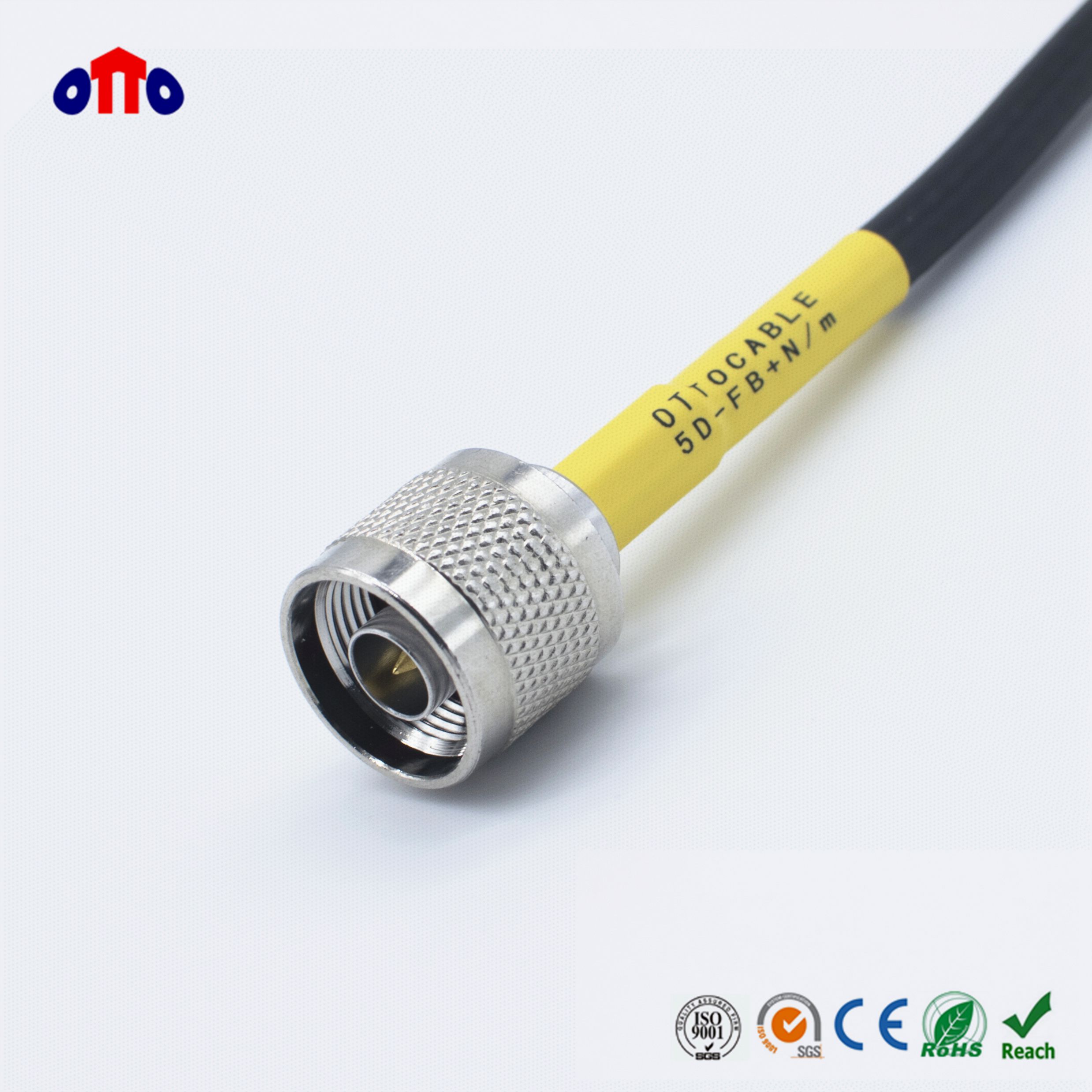
When looking at different types of RF cables, the 5D-FB coaxial cable stands out because it has better loss properties and more installation choices. The 5D-FB has much lower attenuation rates than RG-58 lines, which are often used in older setups. This is especially true at frequencies above 900MHz, where mobile communication systems work.
When compared to the RG-6 and RG-11 types that are usually used in CATV applications, the cable's efficiency edge becomes clear. RG-11 has great loss characteristics, but its larger diameter and rigid design make it hard to place in tight areas. The 5D-FB has similar performance but is more flexible, so it can route through complicated paths without losing the integrity of the signal.
Instead of the 5C-FB version, the 5D-FB version can handle more power and last longer mechanically. The bigger width of the conductor allows for higher power transfer needs while keeping the impedance fixed as the temperature changes. Because the weather changes so much outside, this benefit is especially useful for things that are outside.
When it comes to large-scale deployments, the 5D-FB strikes the best mix between speed and cost. Even though it costs more than normal RG cables, this one has a better total cost of ownership because it lasts longer and needs less upkeep. The foam dielectric design keeps out wetness better than solid polyethylene options, so it doesn't need to be replaced as often in harsh settings.
The cable's manageable thickness and flexibility make it easier to install and save money on work costs. The 5D-FB can be installed using normal methods while still providing professional-level performance, unlike larger, more rigid options that need special handling tools. This efficiency in installation means shorter project timelines and lower total costs for rollout.
To successfully buy 5D-FB coaxial cables, you need to carefully evaluate possible providers based on their ability to make the cables, their quality certifications, and how reliable their supply chain is. Manufacturers with ISO 9001 certification should be given priority because they show they are committed to consistent quality management practices. More certificates, like RoHS, REACH, and CE compliance, make sure that regulations are followed in all foreign markets.
Evaluation of manufacturing ability is very important for big projects that need to be delivered on time every time. Suppliers who have more than one work shift and can ship more than 150 km per day show that they have the facilities to meet the needs of large businesses. Quality control systems that use thorough testing procedures make sure that every cable meets certain standards for electrical and mechanical performance.
For normal configurations, the minimum order quantity is usually around 3,000 meters, but providers may be able to work with smaller amounts for specific uses. When you order in bulk, you save money and make sure that the cable properties are the same throughout the whole installation. Longer wait times may be needed for custom color specs and special jacket materials, so early planning for procurement is key to the success of the project.
Standard setups usually have delivery times between 10 and 15 days, but there are faster choices for those who need them right away. When suppliers keep smart amounts of inventory, they can often handle rush orders in less time. The right packing specs protect the integrity of the cable while it's being shipped and make it easier to handle at installation sites.
A full guarantee that lasts at least three years is necessary to protect against manufacturing flaws and failure before its time. When suppliers offer replacement promises for broken goods, it shows that they trust their manufacturing processes and protects buying investments. Technical help makes sure that the right cables are chosen and that installation is done correctly throughout the span of a project.
The 5D-FB coaxial cable works especially well in setups of distributed antenna systems where the success of the system depends on keeping the signal strong over long cable runs. Mobile signal amplification systems depend on the low-loss properties of the cable to keep weak donor signals intact before they are amplified. This makes sure that the best coverage improvement happens. The 50-ohm impedance of the cable works perfectly with cellular devices, so there are no impedance mismatches that could slow down the system.
The cable's stable electrical properties across a wide frequency range are good for radar systems. The foam dielectric design keeps the speed of transmission constant even when the temperature changes. This makes sure that the target can be accurately found and measured. These traits are used in military and space uses for mission-critical transmission systems that need to be reliable all the time.
In manufacturing settings, electromagnetic situations can be tricky, and signal consistency is very important. The 5D-FB has two shielding layers that keep data transfer safe from interference from variable frequency drives, welding tools, and other sources of industrial noise. This safety is important for SCADA systems to keep getting correct data from sensors and control devices that are far away.
The cable's mechanical strength and resistance to environmental damage make it ideal for wireless IoT deployments in manufacturing sites. The design of the cable keeps its electrical performance even when it is exposed to vibrations, changes in temperature, and industrial chemicals. This durability cuts down on upkeep needs and makes sure that automated systems always have a way to link.
The 5D-FB is used by television distribution networks to send signals from stations to distribution devices. The cable has great return loss properties that stop signal echoes that could hurt picture quality or damage equipment. Broadcast facilities depend on the cable's stable impedance to keep data quality high through complicated route systems.
The low noise of the line is good for professional audio setups that use wireless microphones and in-ear monitors. The protection on the cable keeps other RF sources from interfering with the signal while keeping it clear. Concert halls and TV sets count on this to make sure that performances and production quality don't stop.
The 5D-FB coaxial cable is a high-tech engineering answer that solves important signal transfer problems in a wide range of industrial settings. It has an advanced foam dielectric structure and dual-layer insulation that give it great performance while still making it easy to install. The cable is the best choice for demanding RF applications that need to keep the signal strong over long distances and in harsh environments because it has better loss properties, can withstand harsh environments, and is cost-effective.
A: Attenuation rates for the 5D-FB are usually around 0.19 dB/meter at 900MHz and 0.30 dB/meter at 2.4GHz. These low-loss features work much better than standard RG-58 lines, which have attenuation levels that are almost twice as high at similar frequencies. The better loss traits are due in part to the foam dielectric design, which lowers the dielectric constant compared to solid polyethylene alternatives.
A: The 5D-FB keeps up its great electrical performance across a wide range of frequencies, going well beyond what is required by traditional CATV standards. The cable's design allows it to work efficiently up to 3GHz, which means it can be used for current wireless communication systems like cellular, WiFi, and the soon-to-be-released 5G systems. The fixed impedance properties across this frequency range make sure that broadband uses always work well.
A: Signal echoes can lower communication quality and even damage equipment if the impedance matching is not done correctly. The 5D-FB's exact 50-ohm impedance makes it work with current wireless transmission gear and keeps the VSWR (Voltage Standing Wave Ratio) at a level that is acceptable. The cable's resistance stays the same even when the temperature changes, so the method works well in a variety of settings.
With our wide range of 5D-FB coaxial cable options, OTTO CABLE is ready to meet all of your RF communication needs. Our three-shift manufacturing process makes sure that our products are always available and meet the quality standards needed for important uses. Email us to talk about your unique needs and use our knowledge of designing wireless systems. Our 5D-FB coaxial cable maker can help you find the best solutions for your signal transmission problems, whether you need a lot of cables for a large-scale deployment or specific setups for a specific use.
1. Johnson, R.A. "Coaxial Cable Design Principles for RF Applications." IEEE Transactions on Microwave Theory and Techniques, 2023.
2. Thompson, M.K. "Low-Loss Transmission Lines in Wireless Communication Systems." Journal of RF Engineering, 2022.
3. Chen, L.W. "Foam Dielectric Technology in High-Frequency Coaxial Cables." International Conference on RF Components, 2023.
4. Anderson, P.R. "Shielding Effectiveness in Multi-Layer Coaxial Cable Design." Proceedings of the Electromagnetic Compatibility Society, 2022.
5. Martinez, S.J. "Signal Integrity Considerations for Distributed Antenna Systems." Wireless Infrastructure Magazine, 2023.
6. Williams, D.C. "Cost-Benefit Analysis of Premium Coaxial Cables in Industrial Applications." Industrial Communication Systems Review, 2022.